

Better focus is not only a matter of trying harder.
Your ability to concentrate is shaped by sleep, stress, food, surroundings, habits, and the way you train attention. When one part of that system is strained, focus can become difficult even when your intentions are clear.
The Focus Pyramid Framework offers a practical way to understand those connections. It brings four areas together:
- Recovery
- Nutrition
- Environment
- Attention
This framework is the foundation of The Focus Pyramid, Book Four in Prosemakers’ Mindful Meditation Series. Its central idea is simple: to improve focus and attention, support the whole system rather than relying on willpower alone.
Focus is a system, not a character trait
Many people treat distraction as a personal failure. They assume they need more discipline, a better app, or a stricter productivity routine.
Sometimes the real issue is more basic.
You may be trying to concentrate after poor sleep. You may be working in an environment filled with notifications. You may be skipping meals and running low on energy. You may be asking your mind to focus for hours without a meaningful pause.
The neuroscience of focus points to attention as a limited and flexible capacity. It depends on the brain’s ability to regulate arousal, manage competing information, hold a goal in mind, and return to that goal when attention drifts.
That capacity can be supported.
The Focus Pyramid gives you a way to identify which part of your system needs attention first.
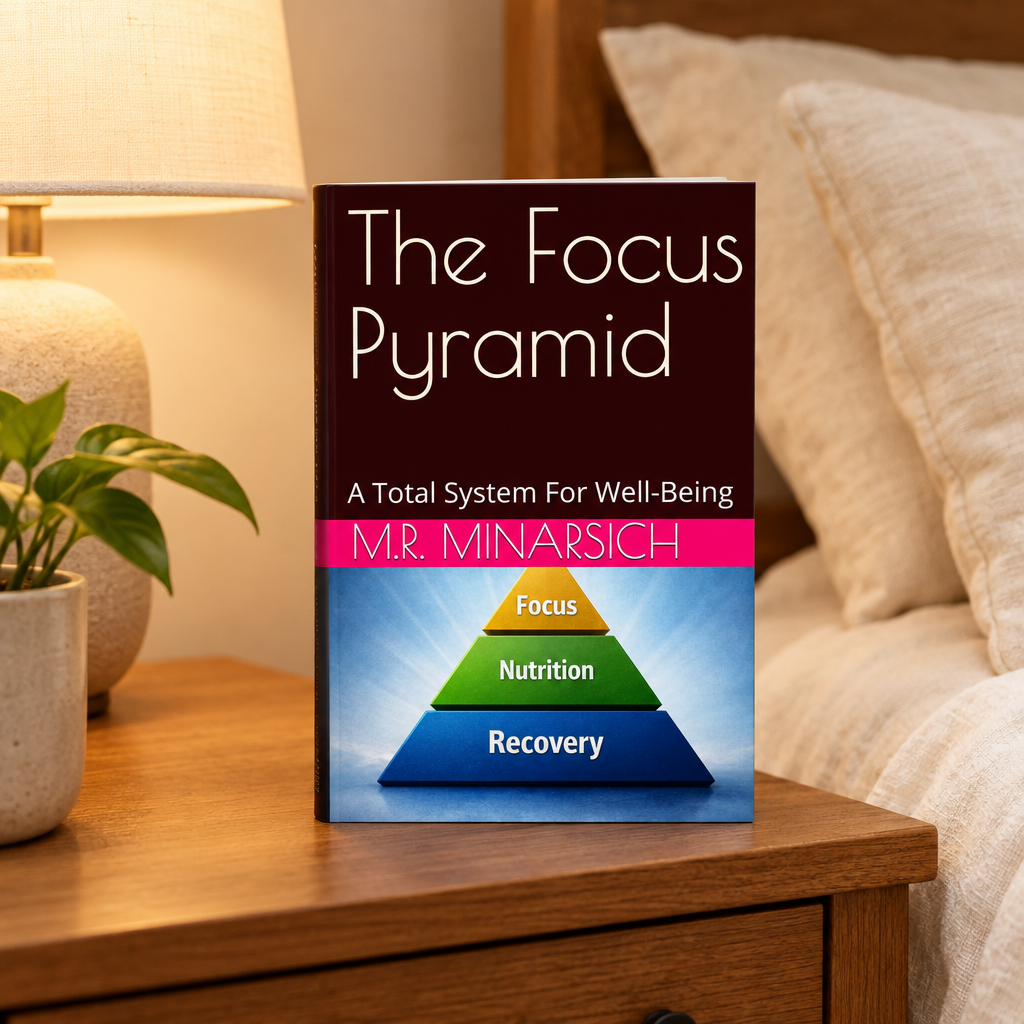
The four layers of the Focus Pyramid
The pyramid is organized from foundation to practice. Start at the bottom, then build upward.
A higher layer may be useful, but it cannot always compensate for a weak foundation.
1. Recovery: restore the capacity to focus
Recovery is the base of the pyramid.
This includes sleep, rest, physical movement, and periods of reduced mental demand. These are not separate from productivity. They help determine how much productive attention is available in the first place.
Sleep supports memory, emotional regulation, and the brain’s ability to maintain a goal. When sleep is inconsistent, tasks that require sustained attention may feel harder. Irritability and impulsive choices may also become more noticeable.
Recovery also includes smaller pauses during the day. A short walk between meetings, a quiet lunch away from a screen, or a few minutes of reduced stimulation can help interrupt accumulated mental fatigue.
Start with one realistic adjustment:
- Keep a more consistent sleep and wake time.
- Add a short break between demanding tasks.
- Step away from screens during one part of the day.
- Use gentle movement to reset your body before returning to work.
The goal is not perfect recovery. It is to stop treating exhaustion as a problem that more effort can solve.
2. Nutrition: give the brain steady support
Nutrition is the second layer because attention requires energy.
This does not mean following a rigid diet or tracking every nutrient. It means noticing whether your meals, hydration, and daily energy patterns support the work you are asking your brain to do.
Long gaps between meals, inadequate food intake, and dehydration may contribute to tiredness, irritability, or difficulty staying mentally engaged. Individual needs vary, so the most useful approach is practical observation rather than universal rules.
Build a steadier foundation with simple choices:
- Eat regular meals when possible.
- Include a source of protein, complex carbohydrates, and colorful produce.
- Keep water available during focused work.
- Notice whether heavy meals, skipped meals, or excess caffeine affect your attention.
- Seek professional guidance if you have a medical condition or specific dietary needs.
Nutrition does not create instant concentration. It can, however, reduce avoidable fluctuations that make attention harder to sustain.
3. Environment: make focus easier to begin
Your surroundings constantly compete for attention.
A phone within reach, an open inbox, multiple browser tabs, background noise, and frequent notifications all create additional demands. Each interruption may be brief, but returning to the original task still requires mental effort.
The environment layer is about reducing unnecessary competition.
Try making one focused work period easier:
- Silence nonessential notifications.
- Keep only the materials for the current task visible.
- Close unrelated tabs.
- Use headphones, a quieter room, or a consistent focus location.
- Place your phone outside immediate reach.
- Keep a notepad nearby for thoughts that need to be handled later.
This is not about creating a perfect workspace. It is about lowering friction.
A useful environment answers a simple question: Does this setup support the behavior I want to repeat?
If you want to read, keep the book accessible. If you want to write, prepare the document before your work block begins. If you want to meditate, choose a location where a few quiet minutes are realistic.
Small cues can help the brain associate a place or time with a particular kind of attention.
4. Attention: train the ability to return
Attention is the active layer of the pyramid.
This is where many people begin, but the skill becomes more sustainable when recovery, nutrition, and environment are reasonably supported.
Attention training does not mean eliminating every thought. It means noticing where attention has gone and choosing whether to return.
That return is the practice.
You can strengthen it through:
- Single-tasking instead of constant task switching.
- Working in short, defined blocks.
- Choosing one clear priority before beginning.
- Taking brief pauses before starting a new activity.
- Noticing distraction without criticizing yourself.
- Returning to the task or sensory anchor with as little drama as possible.
The breathing reset from our earlier post, “How to Focus Better in 5 Minutes: A Mindful Breathing Reset for Busy Days”, fits naturally within this layer. A few slower breaths can help you notice your current state, reduce some immediate tension, and create a clear transition into the next task.
Breathing is one tool. It is not the entire system.

Why the layers work together
The four layers influence one another.
Poor recovery can make distractions harder to resist. An unstable meal pattern can make long periods of concentration uncomfortable. A noisy environment can overwhelm even a well-rested mind. Limited attention practice can make it difficult to redirect after an interruption.
The reverse is also true.
A better sleep routine may make attention practice easier. A prepared workspace may reduce the number of times you need to use willpower. A short mindfulness exercise may help you notice fatigue before you push through it. A regular meal may make a demanding work block more manageable.
This is the practical value of the pyramid. It helps you look for connections instead of searching for one perfect technique.
A simple Focus Pyramid check-in
Use this four-question check-in when concentration feels difficult:
Recovery
Have I had enough sleep and meaningful downtime to approach this task well?
If not, consider a shorter work period, a brief walk, or a planned recovery break.
Nutrition
Have I eaten and hydrated in a way that supports steady energy?
If not, take care of the basic need before blaming your attention.
Environment
What is competing with the task right now?
Remove one distraction. You do not need to redesign your entire workspace.
Attention
What is the next clear action, and how will I return when my mind wanders?
Define the next step. Then begin.
This check-in takes less than a minute. It can help you diagnose the weakest layer before adding more tools.
Use the framework without making it complicated
The Focus Pyramid is not a demand to overhaul your life.
Choose one layer first.
If you are tired, begin with recovery. If you are distracted by digital noise, adjust your environment. If your energy drops between meals, review your nutrition patterns. If your basic needs are supported but your mind still wanders, practice returning attention through breathing, single-tasking, or short meditation.
A small change that you repeat is more useful than a complex routine that you abandon.
The Focus Pyramid develops this systems-based approach through practical discussion of sleep, stress, nutrition, environment, and attention training. It is designed to help readers identify where focus breaks down and build a plan that can adapt to ordinary life.
For a beginner-friendly introduction to meditation practices that support noticing and returning, explore Mindful Meditation Made Easy: Your Step-By-Step Guide. For a closer look at the relationship between meditation and cognitive processes, see Meditation and Your Brain: Breathe Your Way to Well-Being.
What the Focus Pyramid does, and does not, promise
The framework does not promise constant concentration. It does not replace medical care, mental health treatment, professional nutrition advice, or evaluation for conditions that affect attention.
It also does not suggest that every focus problem can be solved with better habits. Stress, illness, medication, anxiety, depression, ADHD, sleep disorders, and other factors may affect attention and deserve appropriate professional support.
The framework offers a way to work with the factors you can examine and adjust. It treats distraction as information rather than evidence of personal failure.
Begin with the weakest layer
To improve focus and attention, you do not need to fix everything at once.
Start with one question:
Which layer is asking for support today?
Recover before forcing. Fuel before pushing. Simplify the environment before blaming your discipline. Train attention through small, repeatable returns.
That is the Focus Pyramid Framework: recovery, nutrition, environment, and attention working together to make sustained focus more realistic.
The next post in this series will explore focused attention versus open monitoring and how these meditation styles may support different aspects of attention and focus.

0 comments