

Meditation is often described as one practice. In reality, it includes several ways of working with attention.
Two of the clearest examples are focused attention and open monitoring. Both involve awareness. Both may support well-being. But they train attention in different ways.
Focused attention narrows the mind toward one chosen object, such as the breath. Open monitoring widens awareness so thoughts, sensations, sounds, and emotions can be noticed without selecting one as the main target.
So which style is better for your brain?
The science-led answer is simple: it depends on the kind of attention you want to strengthen.
If your immediate goal is steadier concentration, focused attention is usually the more direct starting point. If your goal is flexibility, broad awareness, and a less reactive relationship with thoughts and sensations, open monitoring may be a better fit.
Neither style needs to be complicated. Both can begin with a few quiet minutes.
The basic difference: select or observe
Focused attention and open monitoring use overlapping mental abilities, but they give attention different instructions.
Focused attention: choose one target
In focused attention meditation, you select one object and return to it repeatedly.
That object might be:
- The physical sensation of breathing
- A sound
- A phrase or mantra
- The feeling of your feet while walking
- A neutral sensation in the body
The practice has a clear sequence:
- Choose an anchor.
- Notice when attention drifts.
- Return to the anchor.
- Repeat without treating distraction as failure.
This is important. The training is not simply “staying focused.” The return is the exercise.
Each time you notice that your mind has wandered and gently come back, you are practicing attention and focus under ordinary conditions. A busy mind is not evidence that meditation is not working. It is the material the practice works with.
Open monitoring: widen the field
Open monitoring does not require one central object. Instead, you observe whatever enters awareness.
You may notice:
- A thought about the future
- A sound in the room
- A feeling of tension
- A change in breathing
- An emotion
- A memory
- A physical sensation
The instruction is to notice these experiences without immediately following, suppressing, or judging them.
Open monitoring is not passive daydreaming. It involves a steady awareness of changing experience. You recognize what is present, allow it to be known, and avoid being pulled completely into it.
That difference gives each practice a distinct attentional profile.
What the neuroscience of meditation suggests
Research on the neuroscience of meditation does not support the idea that one style is universally best. It suggests that different practices can engage different forms of cognitive control and awareness.
Focused attention is generally associated with:
- Selective attention
- Sustained attention
- Monitoring for distraction
- Redirecting attention toward a goal
- Filtering competing information
These processes involve systems that help the brain maintain a task, detect conflict, and regulate distractions. Studies of meditation also frequently examine the prefrontal and anterior cingulate regions, which are involved in attention, monitoring, and cognitive control.
Open monitoring places more emphasis on:
- Broad awareness
- Interoception, or awareness of internal bodily signals
- Meta-awareness, or knowing what the mind is doing
- Non-reactive observation
- Flexible shifting between experiences
Research has associated this style with activity across broader frontoparietal and insular networks. These findings are not a simple map of “one practice equals one brain region.” The brain works through connected systems, and results vary with experience, instruction, task, and study design.
Still, the overall pattern is useful:
Focused attention trains the ability to select and sustain. Open monitoring trains the ability to notice and remain flexible.

Focused attention and the neuroscience of focus
If you want to improve the neuroscience of focus in everyday terms, focused attention is the most intuitive place to begin.
It resembles many situations in daily life:
- Reading a difficult page
- Listening during a meeting
- Writing without checking notifications
- Completing one step before starting another
- Returning to a task after interruption
The practice develops a repeatable loop. You set an intention, detect drift, and redirect.
That loop may support better awareness of distraction. It can also help make distraction less automatic. You still notice the notification, memory, or worry. The difference is that you have practiced choosing whether to follow it.
Focused attention may be especially useful when your attention feels scattered by:
- Frequent digital interruptions
- Mental fatigue
- An inconsistent routine
- Stress
- A tendency to switch tasks quickly
Start with five minutes. Use the breath as an anchor, but do not force a particular breathing pattern. Notice one inhale and one exhale. When attention wanders, identify the drift plainly (“planning,” “remembering,” or simply “thinking”) and return.
That is enough.
This approach connects naturally with the earlier guide to meditating with a racing mind. The goal is not to eliminate mental activity. It is to shorten the time between losing the thread and noticing that you have lost it.
Open monitoring and flexible awareness
Open monitoring may be more useful when the challenge is not only distraction, but reactivity.
For example, you may notice that:
- A stressful thought quickly becomes a full worry loop
- A physical sensation immediately feels threatening
- A difficult emotion takes over your attention
- You become so absorbed in one task that you miss important changes around you
- You react before understanding what is happening
Open monitoring creates space around these experiences. You do not need to solve every thought as soon as it appears. You can notice the thought as a thought, the sensation as a sensation, and the emotion as an experience that is changing over time.
Some research suggests that open monitoring may support the detection of changing information and flexible attention. It may be relevant in situations that require awareness of several inputs rather than deep concentration on one target.
However, broader awareness is not always the right choice. When someone is already highly anxious or overwhelmed, opening attention to every internal sensation may feel destabilizing. A simple external anchor, movement, or focused breathing practice may be more manageable.
The best practice is the one that supports steadier functioning rather than increasing distress.
Focused attention vs. open monitoring
| Feature | Focused attention | Open monitoring |
|---|---|---|
| Main instruction | Stay with one chosen object | Notice whatever arises |
| Attentional scope | Narrow and selective | Broad and receptive |
| Core skill | Sustaining and redirecting | Observing and allowing |
| Useful for | Concentration and task stability | Flexibility and meta-awareness |
| Common anchor | Breath, sound, mantra, body sensation | Changing thoughts, sensations, sounds, and emotions |
| Main challenge | Returning without frustration | Observing without getting pulled in |
This is not a competition. The two practices can complement each other.
Focused attention can provide stability. Open monitoring can help you use that stability to observe experience with greater flexibility.
A practical sequence for everyday focus
You do not need to choose one style forever. Try this simple progression.
Stage 1: Build stability
Practice focused attention for five minutes.
- Sit comfortably.
- Let breathing remain natural.
- Choose the sensation of breathing as your anchor.
- Notice when attention drifts.
- Return without criticism.
Repeat for one or two weeks. The aim is familiarity, not intensity.
Stage 2: Add open monitoring
After focused attention, spend two minutes allowing awareness to widen.
Notice sounds, thoughts, body sensations, and emotions. Do not search for anything special. When you become absorbed in one experience, recognize that and return to observing the wider field.
Stage 3: Apply the skill
Use the same distinction during the day.
Choose focused attention when you need to:
- Read
- Write
- Study
- Complete a work task
- Have an important conversation
Use open monitoring when you need to:
- Notice stress before reacting
- Review a complex situation
- Listen to several perspectives
- Recognize changing conditions
- Create distance from repetitive thinking
This progression also fits the broader system described in The Focus Pyramid Framework. Attention is one layer of focus, not the entire structure. Recovery, nutrition, environment, and mental habits all influence how much attention is available.
How Prosemakers connects meditation with brain science
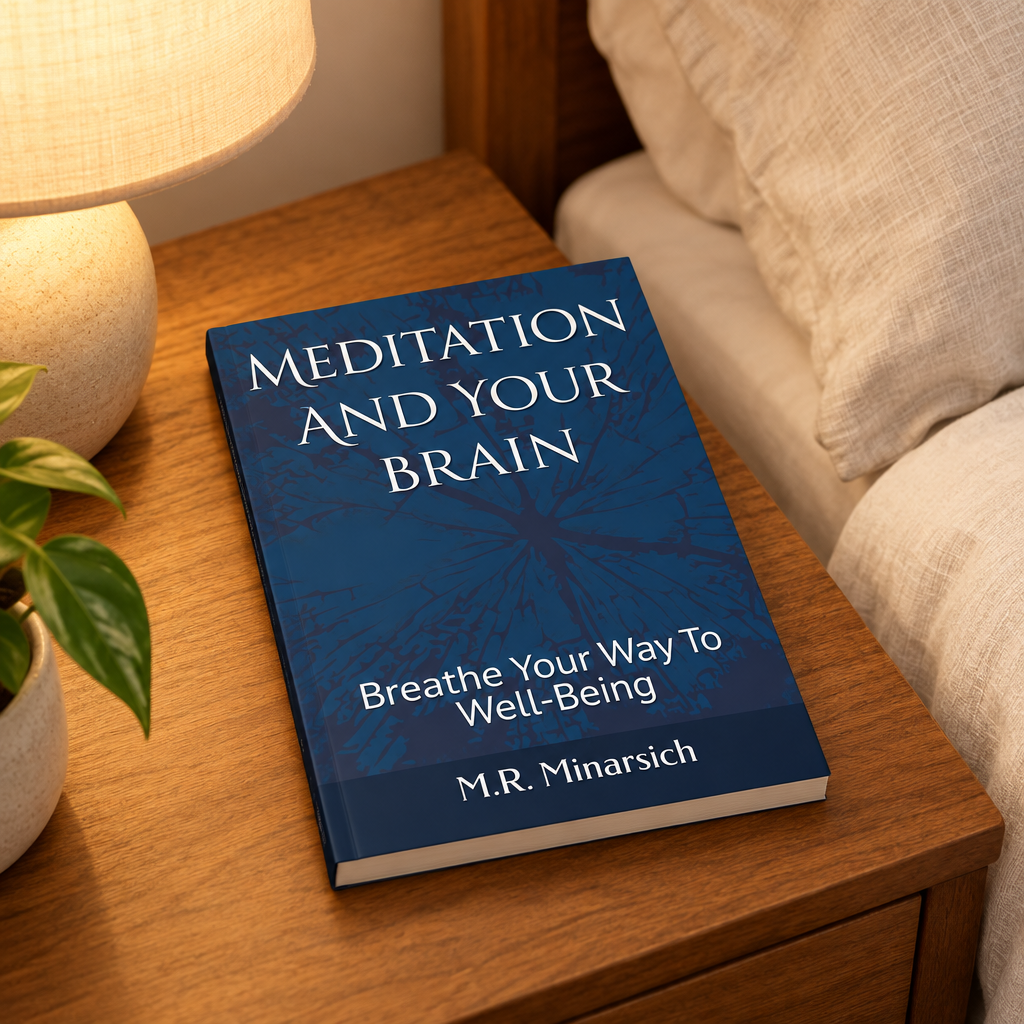
Meditation and Your Brain: Breathe Your Way to Well-Being connects practical meditation techniques with accessible explanations of attention, stress, memory, and emotional regulation. It is designed for readers who want a repeatable practice without rigid rituals.
Consciousness and Your Brain: Perception or Deception? explores how attention, expectation, memory, and emotion shape conscious experience. Its central question is useful here: what you notice is influenced by where attention goes and how the brain interprets what it receives.
Together, these books offer two complementary perspectives:
- Meditation as a practical way to train attention
- Neuroscience as a way to understand why attention changes experience
So, which meditation style is better?
For attention and focus, start with focused attention. It gives you a clear object, a simple procedure, and a direct way to practice returning to what matters.
For flexibility and non-reactive awareness, explore open monitoring. It can help you notice how thoughts, emotions, and sensations influence experience without automatically becoming absorbed in them.
For many people, the most useful approach is a combination:
- Focus attention on one anchor.
- Notice and redirect distraction.
- Widen awareness.
- Observe the mind and body without judgment.
- Return to the next ordinary activity with one clear intention.
Progress may be gradual. A few minutes repeated consistently can be more useful than an elaborate routine that is difficult to maintain.
Meditation may support attention, stress management, and emotional awareness, but it is not a replacement for professional medical or mental health care. If meditation increases distress, panic, dissociation, or difficult symptoms, pause the practice and consult a qualified healthcare professional.
The brain can learn different ways of paying attention. Start with the style that matches your current need. Then, when it feels steady, explore the other side.
Neither narrow focus nor open awareness is the whole answer.
Together, they offer a more complete way to meet the mind.

0 comments